Rice farming is an important agricultural activity in Pakistan, particularly in Punjab and Sindh, where farmers cultivate rice for domestic consumption and international markets. As farming operations become more demanding, many growers are exploring agricultural machinery that can improve planting efficiency, reduce dependence on manual labour, and support more organized crop establishment. A rice transplanter is one such machine, designed to transplant young rice seedlings into prepared paddy fields.
For farmers, agricultural contractors, rice growers, and agricultural businesses searching for a Kubota rice transplanter in Pakistan, understanding the machine's purpose, operating requirements, buying considerations, and total ownership cost is essential before making an investment. The right machine depends on the size of the farming operation, field conditions, available labour, seedling preparation methods, and the level of support available after purchase.
Ardlink helps connect agricultural businesses with machinery sourcing opportunities. This guide explains how rice transplanters work, the features buyers should evaluate, the factors that influence price, and the questions to ask before purchasing a Kubota rice transplanter for agricultural operations in Pakistan.
What Is a Kubota Rice Transplanter?
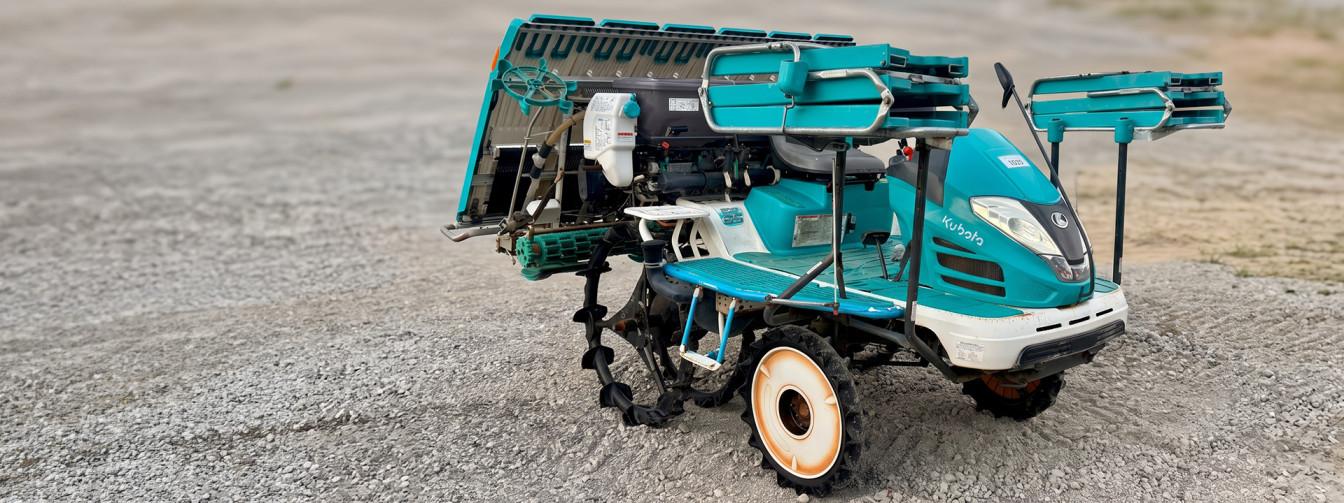
A rice transplanter is an agricultural machine used to transfer young rice seedlings from nursery trays or prepared seedling mats into a cultivated paddy field. Instead of relying entirely on workers to plant seedlings manually, the machine uses a planting mechanism to place seedlings into the soil in a more organized pattern.
Kubota is a recognized agricultural machinery brand associated with tractors, rice transplanters, combine harvesters, and other farming equipment. Its rice transplanters are designed for mechanized rice cultivation, although the precise features, planting capacity, configuration, and operating requirements depend on the individual model.
For buyers in Pakistan, the term Kubota rice transplanter may refer to different models and configurations. Therefore, it is important to identify the exact model being offered, review its manufacturer documentation, and confirm whether the machine is suitable for the intended farming conditions.
How Does a Rice Transplanter Work?
The rice transplanting process generally begins with growing rice seedlings in a nursery. Depending on the machine design, seedlings may be prepared in specialized trays or as seedling mats that fit the transplanter's planting mechanism.
Once the seedlings are ready, the operator prepares the field, positions the machine, and loads the required seedlings. The planting mechanism picks up portions of the seedlings and places them into the prepared soil as the machine moves across the field.
When correctly configured and operated, mechanized transplanting can help establish more consistent planting rows and spacing than may be achievable through some manual methods. Actual results depend on seedling quality, field preparation, machine settings, soil conditions, operator skill, and maintenance.
- Seedling preparation: Rice seedlings are raised using a method compatible with the transplanter.
- Field preparation: The paddy field is prepared to meet the requirements of the selected machine and planting method.
- Machine setup: The operator checks the planting mechanism, controls, fuel or power requirements, and other relevant components.
- Seedling loading: Prepared seedlings are positioned in the machine's designated feeding system.
- Transplanting: The machine places seedlings into the soil according to its planting mechanism and settings.
- Field inspection: The operator checks planting depth, spacing, missing seedlings, and other indicators of planting quality.
The main objective is not simply to move faster through the field. Successful transplanting also requires suitable seedlings, correct field conditions, proper machine adjustment, and consistent operation.
Why Consider a Kubota Rice Transplanter in Pakistan?
Farmers in Pakistan may face several challenges during rice planting, including seasonal labour availability, time-sensitive planting schedules, increasing operating costs, and the need to manage larger cultivated areas. Mechanization can be one way to address these challenges when the machine is appropriate for the farm's requirements.
A Kubota rice transplanter may be worth evaluating for commercial rice farms, agricultural contractors, and businesses that provide planting services to other farmers. However, the investment should be assessed against actual field requirements and realistic financial calculations rather than brand name alone.
1. More Organized Planting
Manual transplanting can produce variations in row spacing, seedling placement, and planting density. A suitable rice transplanter can help establish a more systematic planting pattern when operated correctly.
Organized planting may make it easier to plan subsequent field operations, inspect crop establishment, and manage cultivation activities. Nevertheless, machine planting does not automatically guarantee higher yields. Crop performance also depends on variety selection, water management, nutrient availability, pest control, weather, and overall crop management.
2. Potential Labour Savings
Rice transplanting can require substantial seasonal labour, particularly where large areas must be planted within a limited period. A mechanized system may reduce the number of workers required for the transplanting operation, although workers are still needed for seedling preparation, machine operation, field supervision, replenishment, transport, and maintenance.
Before purchasing, farmers should compare the actual cost of their current planting method with the total cost of operating a transplanter. Labour savings will vary according to local wages, field size, machine productivity, fuel or power consumption, and the availability of trained operators.
3. Better Management of Planting Schedules
Rice cultivation often involves time-sensitive operations. Delays in transplanting may affect farm planning and the coordination of other seasonal activities.
A suitable transplanter may help farmers schedule planting more efficiently, particularly when the machine is available when needed and seedlings can be prepared on time. Buyers should consider whether the machine's actual capacity matches the area that must be planted during the available planting window.
4. Opportunities for Agricultural Contractors
A rice transplanter may also be considered by agricultural service providers who perform transplanting operations for other farmers. Rather than using the equipment exclusively on their own land, contractors may charge customers for planting services.
This approach can potentially create an additional agricultural business opportunity. However, profitability depends on local demand, the number of hectares serviced, service rates, transport expenses, maintenance, operator costs, seasonal utilization, and competition from other service providers.
5. Support for Mechanized Rice Farming
Mechanization can help farms standardize selected activities and improve the organization of agricultural operations. A rice transplanter may form part of a broader mechanized farming system that includes tractors, land preparation equipment, irrigation systems, harvesting machinery, and crop handling equipment.
Farmers should consider the transplanter as one component of their complete production system. Its usefulness will depend on whether the nursery, field preparation, water management, labour arrangements, and subsequent crop operations are compatible with mechanized transplanting.
The best rice transplanter is not necessarily the machine with the most features. It is the machine that suits your farm size, field conditions, planting schedule, budget, and access to maintenance and spare parts.
Important Features to Evaluate Before Buying
Different rice transplanter models can have different planting mechanisms, working widths, engine configurations, control systems, and operating requirements. Buyers should verify these details for the exact Kubota model being considered instead of assuming that every machine in the product range has the same capabilities.
1. Planting Rows and Working Width
The number of planting rows and the effective working width influence how much ground a machine can cover during operation. A wider planting configuration may suit some larger operations, while a more compact machine may be easier to manage in smaller or more restricted fields.
When comparing models, consider the width of field access routes, the shape of cultivated plots, turning space, field boundaries, and the arrangement of irrigation channels. A machine that appears suitable based on its specifications may be difficult to operate efficiently if the field layout is incompatible.
- Confirm the number of planting rows.
- Verify the effective working width.
- Check the recommended operating and turning space.
- Assess whether the machine can access the farm's fields and transport routes.
- Confirm the planting configuration against the intended rice cultivation method.
2. Planting Spacing and Depth Adjustment
Planting spacing and depth are important factors in rice crop establishment. The appropriate settings depend on the rice variety, cultivation method, field conditions, and agronomic recommendations.
Before purchasing a transplanter, ask which spacing and planting-depth adjustments are available on the exact model. Request the operator manual or official technical documentation to understand the adjustment procedure and recommended operating ranges.
Do not assume that a machine supports every possible planting pattern. Confirm its available settings and determine whether they match the requirements of the intended crop and farming system.
3. Seedling Tray and Feeding System
Many mechanized rice transplanting systems depend on seedlings prepared in a compatible nursery system. Seedling mats or trays must be suitable for the machine's feeding and planting mechanism.
Incompatible seedlings can result in feeding difficulties, missing plants, irregular placement, or interruptions during operation. Therefore, seedling preparation should be considered part of the machinery investment rather than an unrelated activity.
Before buying, confirm the required seedling format, tray dimensions where applicable, nursery preparation method, and the availability of suitable consumables. Ask the supplier whether training or operating instructions are available for preparing and loading seedlings correctly.
4. Engine, Power, and Fuel Requirements
The engine or power configuration determines how the machine operates and affects its maintenance requirements. Buyers should obtain verified information about engine type, rated output where applicable, fuel requirements, operating controls, and routine servicing.
Fuel consumption should not be estimated from the brand name or from specifications belonging to a different model. If the seller provides a consumption figure, ask how it was measured and under which field conditions.
For imported machinery, also check whether the engine documentation, identification plate, service information, and required replacement components are available for the specific unit.
5. Maneuverability and Field Suitability
Rice fields in Pakistan can vary considerably in size, shape, soil condition, water management, and access. Some farms may have relatively large, regular plots, while others may consist of smaller fields separated by bunds or irrigation channels.
Evaluate whether the transplanter's dimensions, steering or control arrangement, turning capability, and operating requirements are suitable for the farm. Ask for a demonstration or a practical assessment whenever possible.
Buyers should also confirm the manufacturer's recommendations regarding field preparation, soil condition, standing water, and other operating requirements. Incorrect field conditions can reduce planting quality and make machine operation more difficult.
6. Operator Controls and Ease of Use
A machine's practical value depends partly on how easily the operator can use and maintain it. Review the control layout, visibility, adjustment procedures, routine inspection points, and the availability of operating instructions in a language the operator understands.
If the farm does not already have experience with mechanized transplanting, ask whether training, demonstration, or operator guidance can be arranged. A familiarization period may help reduce avoidable mistakes and improve the consistency of field operations.
7. Maintenance and Spare Parts
Maintenance arrangements are especially important when purchasing imported agricultural machinery. A machine that cannot be serviced promptly during the planting season may create costly delays.
Before committing to a purchase, investigate the availability of replacement parts and identify components that may require periodic inspection or replacement. Depending on the model, these may include planting mechanism components, belts, filters, lubricants, bearings, or other service items.
- Ask for the maintenance schedule and operator manual.
- Confirm whether common service parts can be obtained in Pakistan.
- Ask about expected ordering times for imported replacement parts.
- Check whether suitable technicians are available locally.
- Request details of any warranty or after-sales support included in the actual offer.
- Confirm whether technical support is provided directly by the seller, an independent workshop, or an authorized service provider.
New, Used, and Refurbished Rice Transplanters
Buyers searching for a Kubota rice transplanter in Pakistan may encounter new machines, used equipment, or refurbished units. Each option has different financial and operational considerations.
The right choice depends on the buyer's budget, expected annual usage, required reliability, machine availability, and willingness to manage inspection or repair work.
New Rice Transplanters
A new machine may be attractive to buyers who prefer equipment with limited prior use and clearer documentation of its condition. Depending on the specific offer, a new machine may also include a manufacturer's warranty or seller-provided support.
However, the buyer should never assume that a warranty is included simply because a machine is described as new. Confirm the warranty provider, coverage, duration, exclusions, service arrangements, and any conditions that apply.
Availability may also depend on the model, supplier, country of origin, and import arrangements. Ask for the current status and estimated delivery arrangements before planning the planting season around a purchase.
Used Rice Transplanters
A used machine may offer a lower initial purchase cost, but its condition must be assessed carefully. Two machines of the same model can have very different maintenance histories and remaining service lives.
Before buying used equipment, request the machine's identification details, available service history, operating hours if recorded, previous repairs, and photographs of major components. Where possible, arrange an independent inspection and an operational demonstration.
Pay particular attention to the planting mechanism, engine or power system, control functions, signs of corrosion, structural damage, fluid leaks, and the condition of wear components. The inspection should follow the requirements of the actual model.
Refurbished Rice Transplanters
The term refurbished can describe different levels of repair or restoration. Some machines may have received limited servicing, while others may have undergone more extensive replacement or rebuilding work.
Ask for a written description of the refurbishment work, the components replaced, the parts used, and the tests completed. Request photographs and supporting records where available.
Do not evaluate a refurbished machine solely by its appearance. Its mechanical condition, operational performance, documentation, and the credibility of the seller are more important than fresh paint or cosmetic improvements.
Kubota Rice Transplanter Price in Pakistan
One of the most common questions buyers ask is: What is the price of a Kubota rice transplanter in Pakistan?
There is no single reliable price that applies to every Kubota rice transplanter. The final amount depends on the exact model, configuration, condition, country of supply, exchange rate, transportation, import-related costs, and the terms offered by the seller.
For this reason, buyers should request a current quotation for the specific machine they intend to purchase. A quotation should identify the machine clearly and explain what is included in the price.
Factors That Affect the Price
- Exact model: Different models may have different configurations, capabilities, and market values.
- Machine condition: New, used, and refurbished equipment should not be compared as if they were identical.
- Working configuration: Planting rows, installed equipment, accessories, and other specifications may affect the price.
- Country of origin and supply: The sourcing location and applicable commercial arrangements can influence the cost.
- Currency exchange rate: Imported machinery prices may change when exchange rates fluctuate.
- Freight and transportation: Shipping, inland transport, handling, and delivery arrangements can contribute to the total cost.
- Import duties and taxes: Applicable charges depend on the current rules, product classification, customs valuation, and the specific import arrangement.
- Inspection and documentation: Certain transactions may require additional inspection, testing, handling, or documentation costs.
- Warranty and support: The services included in the offer may affect the overall value of the purchase.
- Availability: Stock status, sourcing lead time, and seasonal demand can influence the commercial terms offered.
How to Calculate the Total Purchase Cost
When